
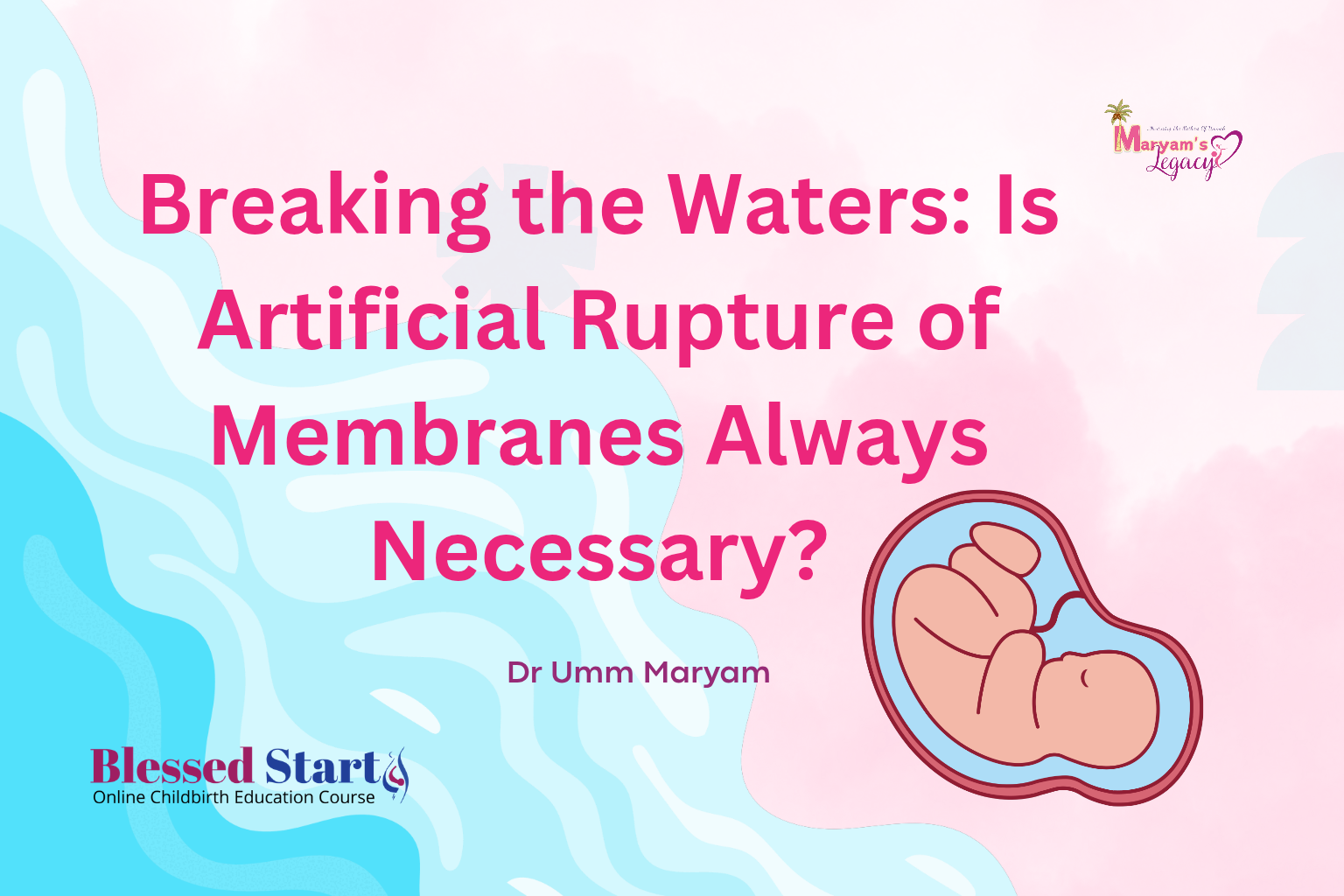
During labour, one common hospital practice is artificial rupture of membranes (ARM) , often called breaking the waters. This involves deliberately opening the amniotic sac to release the fluid surrounding the baby.
Although this procedure is frequently used to try to speed up labour, it is important for mothers to understand that breaking the waters is not always necessary, and in many cases labour can continue safely without it.
Knowing when this intervention may help and when it may not , allows mothers to make informed decisions during labour.
What Is Artificial Rupture of Membranes?
Artificial rupture of membranes means a healthcare provider uses a sterile instrument to make a small opening in the amniotic sac during labour.
This causes the waters to flow out before they would naturally break on their own.
The procedure is often suggested when labour is progressing slowly or as part of induction.
Why Is It Done?
Breaking the waters may be recommended to:
■ Encourage stronger contractions
■ Speed up labour
■ Allow clearer monitoring of the baby
■ Assess the colour of the amniotic fluid
In some situations, it may help labour progress, but it does not always make a significant difference.
Why It Is Not Always Needed
In many births, the waters break naturally at the most appropriate time — and sometimes they remain intact until late labour or even until birth.
The amniotic sac plays an important role by:
■ Cushioning the baby during contractions
■ Supporting gentle pressure on the cervix
■ Helping the baby rotate naturally
When the waters are broken too early, labour may become more intense.
Possible Effects of Breaking the Waters
After artificial rupture of membranes, contractions may become:
■ Stronger
■ Closer together
■ More intense
This can sometimes increase discomfort and lead to a greater need for pain relief.
It may also reduce the time available before further intervention is considered if labour does not progress quickly.
Possible Risks
Although ARM is a common practice in hospitals nowadays, it carries some risks, including:
■ Increased risk of infection if labour becomes prolonged
■ Cord prolapse in rare cases
■ Stronger contractions causing more stress for mother and baby
■ Increased likelihood of additional interventions
This is why it should not be routine without clear indication and discussion.
Questions Mothers Can Ask Before Agreeing
A mother has the right to ask:
■ Why is this being recommended now?
■ Is labour progressing safely without it?
■ Are there alternatives?
■ What happens if we wait longer?
These questions help ensure informed consent.
Natural Labour Has Its Own Timing
The body knows when the membranes should rupture naturally.
When labour is progressing safely, patience may allow:
■ Gentler progression
■ Better hormonal flow
■ Reduced need for further intervention
Not every slow moment in labour means something is wrong.
Conclusion
Artificial rupture of membranes can sometimes support labour when medically indicated, but it is not necessary for every mother.
Understanding its purpose, benefits, and risks helps mothers feel more confident asking questions and participating in decisions about their birth.
Respectful maternity care means allowing women to understand and consent to procedures before they are performed.
Learn How to Understand Birth Decisions with Confidence
Understanding common practices such as breaking the waters helps mothers approach labour with clarity and confidence.
🌸 Nurturing The Mothers — The Blessed Start Childbirth Education Course
In this course, you will learn:
✨ How labour progresses naturally
✨ Understanding common interventions during labour
✨ Birth planning and informed decision-making
✨ Natural coping techniques for labour
✨ Preparing emotionally and spiritually for birth
✨ Special discounts are currently available for a limited time.
📩 Message to learn more or enrol.
Dr Umm Maryam
Certified Childbirth Educator | Medical Doctor | VBAC Advance Doula | Holistic Women’s Health Practitioner
CEO & Founder of Maryam’s Legacy — Nurturing the Mothers of Ummah